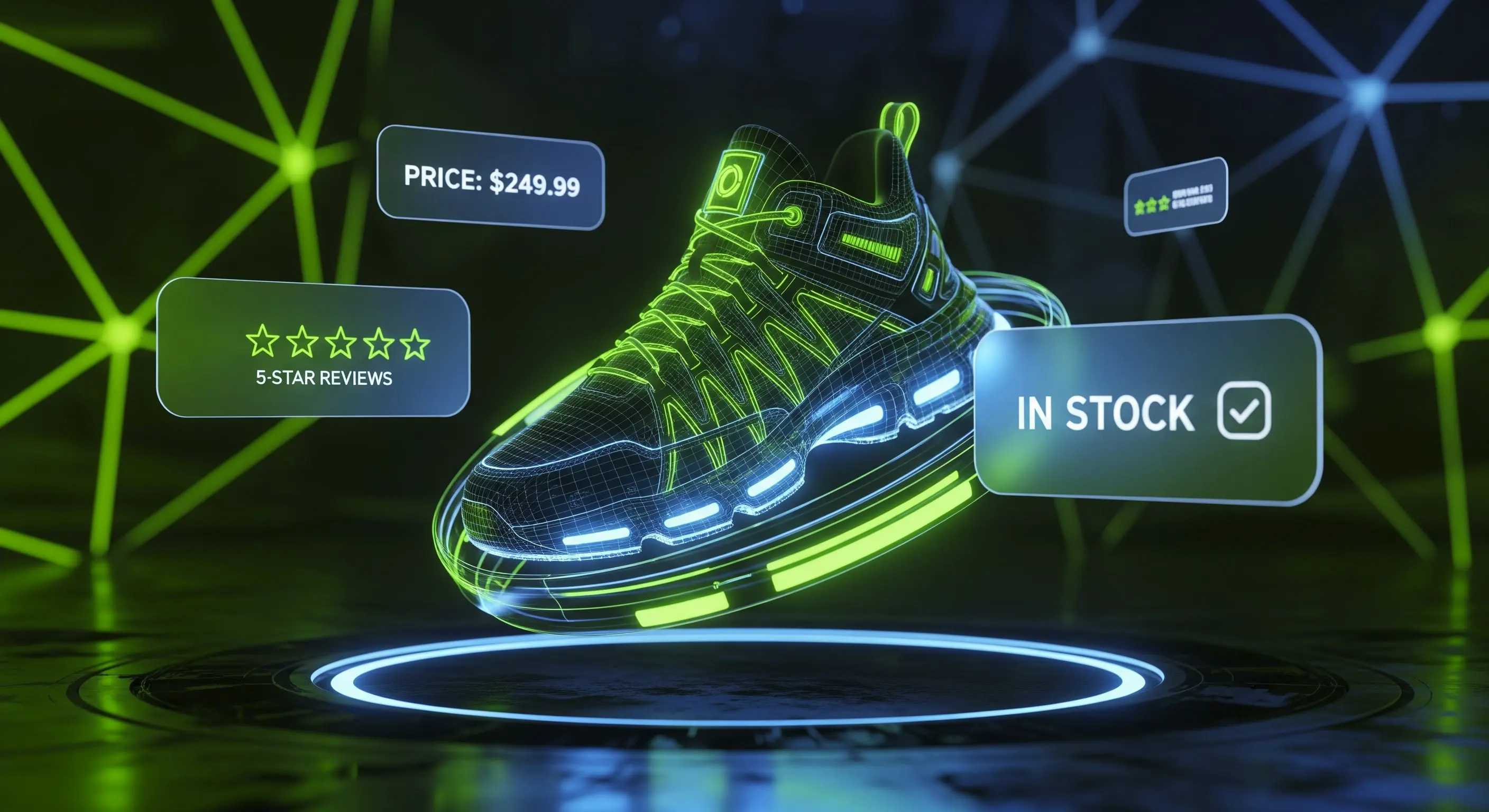
For e-commerce brands, the digital shelf is everything. But with rising ad costs and fierce competition, just being on the shelf isn't enough. Now, Google's AI Overviews are creating a new, exclusive "top shelf" — and getting your products there requires a new strategy called Generative Engine Optimization (GEO).
This isn't just about ranking; it's about being the definitive, AI-recommended answer for shoppers. This guide will show you how to optimize your e-commerce site to not only attract but also convert in the new age of AI-powered search.
- Entity-Level Product Graphs: Ensures AI models recognize pricing, stock, materials, and verified reviews.
- Conversational Query Alignment: Captures long-tail comparison queries (e.g., 'best luxury watch under 20k AED').
- Direct-to-Checkout Citations: Feeds verified URLs directly into generative answer footnotes.
How AI is Changing the Way Customers Shop Online
The online shopping journey is evolving. Instead of a simple search like "women's running shoes," a customer can now ask AI a highly specific question:
"What are the best waterproof trail running shoes for women under $150 with excellent reviews for arch support?"
Google's AI will analyze product pages from thousands of stores to construct a direct answer. The brands that have provided the clearest, most structured, and most trustworthy information about their products will be the ones featured in that answer. This is the new goal of e-commerce SEO.
Traditional E-Commerce SEO vs. Generative Engine Optimization (GEO)
E-Commerce Matrix| Feature / Metric | Traditional E-Com SEO | Generative E-Com SEO (GEO) | Citation Win Rate |
|---|---|---|---|
| Search Target | 10 Blue Google Links & Shopping Carousels | Conversational AI Synthesis & Direct Recommendation | Primary Source |
| Schema Focus | Basic Product & Breadcrumb Schema | Dense Merchant Knowledge Graph & Review Aggregates | Deep Entity Graph |
| Intent Matching | Exact match keywords ('buy leather bag') | Multi-attribute conversational intent & comparative evaluation | +38% Conversion |
The E-commerce GEO Blueprint: 3 Steps to Success
To get your products on AI's "top shelf," you need to focus on three critical areas.
Step 1: Master `Product` Schema Markup
If there is one technical SEO element every e-commerce store must have, it's `Product` schema. This code is like creating a perfect, machine-readable price tag and spec sheet for every item you sell. It allows you to explicitly tell Google all the vital details AI needs to recommend your product.
“Without Product Schema, you’re asking AI to guess your product's details. With it, you're handing AI a verified fact sheet. AI will always choose the verified fact sheet.”
Essential product schema properties include:
- `name`, `image`, `description`: The basics of your product.
- `brand`, `sku`, `gtin`: Your brand and unique product identifiers.
- `offers`: To specify the `price`, `priceCurrency`, and `availability` (e.g., In Stock).
- `aggregateRating`: To show off your star ratings and `reviewCount`.
Step 2: Elevate Your Visuals with 3D and High-Quality Media
AI doesn't just read text; it analyzes the quality of your media. A product page with blurry, low-resolution photos signals a low-quality result. To build trust with both AI and human users, you need to invest in superior visuals.
While high-resolution images and product videos are essential, the gold standard in modern e-commerce is **interactive 3D models**. Allowing customers to spin, zoom, and inspect a product in 3D has been shown to dramatically increase engagement and conversions—in some cases, by over 50%. This level of interactivity is a massive signal of authority and quality to AI models, setting your product apart from flat, static images. Explore 3D Design Services
Step 3: Write Product Descriptions That Answer Questions
Move beyond generic, feature-listing product descriptions. Your copy should be written to anticipate and answer the questions your customers are asking before they buy. This answer-ready content is perfect for being featured in AI Overviews.
- Instead of "Made from durable materials," write "Built with tear-resistant Cordura fabric, making it perfect for rugged outdoor use."
- Instead of "Multiple sizes," provide a detailed size chart and answer, "How does this fit compared to standard sizing? We recommend sizing up."
- Include a dedicated FAQ section on each product page to capture long-tail search queries.