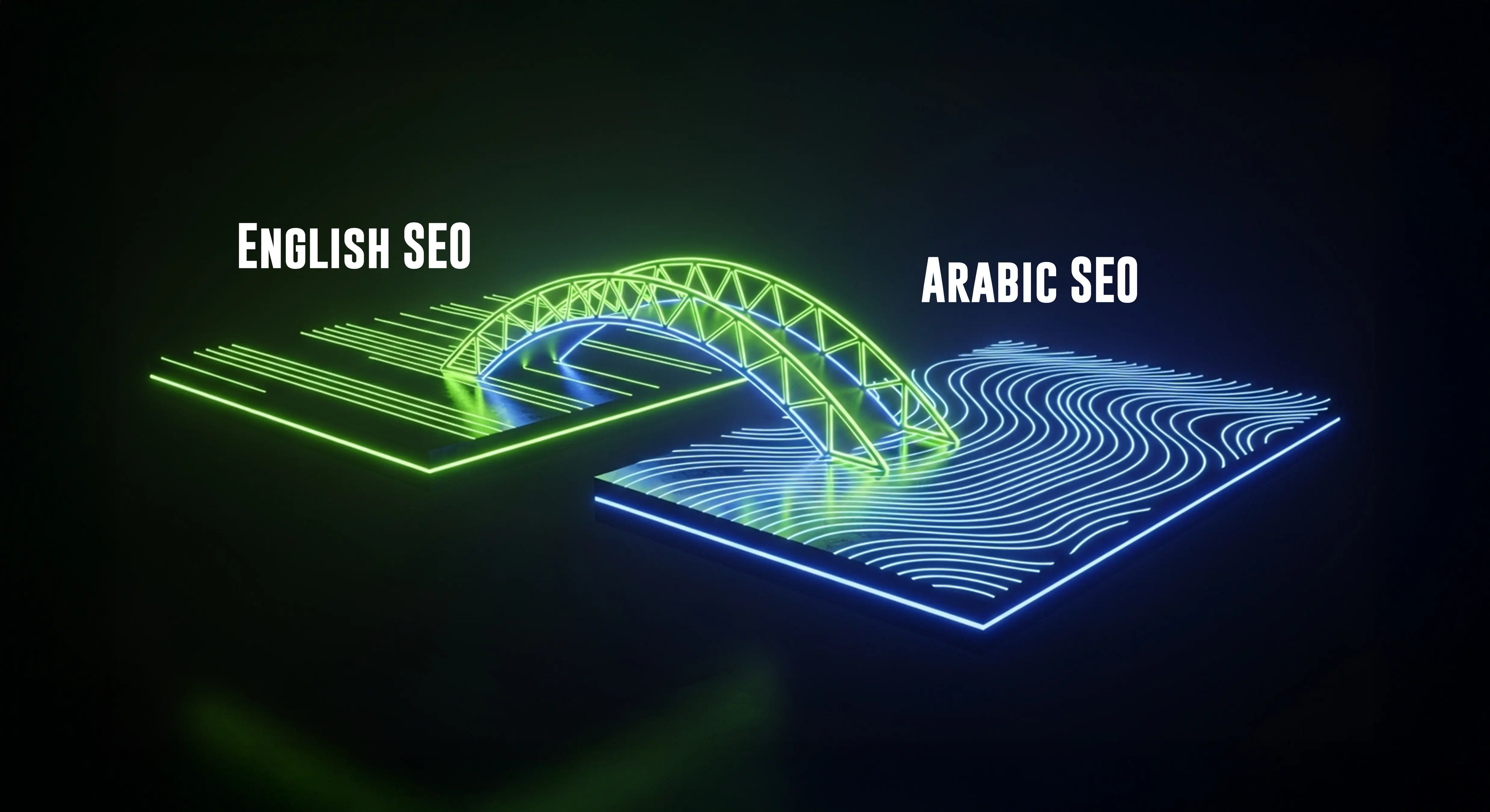
Operating in the UAE means serving a diverse, bilingual audience. Your customers are searching for your services in both English and Arabic, but is your website optimized to capture both? In the new era of AI search, having a robust multilingual SEO strategy is no longer a luxury—it's essential for market leadership.
Simply translating your website isn't enough. To be featured in Google's AI Overviews for both English and Arabic queries, you need a technical and cultural strategy that tells search engines you are an authority in both languages. This guide will walk you through the key pillars of a successful bilingual SEO strategy for the UAE.
- True Cultural Localization: Avoids robotic machine translations; crafts native Arabic copy that resonates locally.
- Technical Hreflang Alignment: Guarantees search engines serve the correct language version based on user locale.
- Bilingual Knowledge Graphs: Feeds verified entity relationships in both Arabic and English into AI search indexes.
The Technical Foundation: Your Multilingual SEO Checklist
Before you even think about content, your website's technical structure must be set up correctly. Getting this wrong can confuse search engines and make one version of your site compete against the other.
Step 1: Choose Your URL Structure
You need to decide how to host the different language versions of your site. The most common and recommended approach for SEO is using subdirectories.
- Subdirectories (Recommended): `yourwebsite.com/en/` and `yourwebsite.com/ar/`. This structure is easy to manage and consolidates all your authority onto a single domain.
- Subdomains: `en.yourwebsite.com` and `ar.yourwebsite.com`. This can sometimes be treated as two separate websites by Google, splitting your authority.
Step 2: Implement `hreflang` Tags Correctly
The `hreflang` tag is a piece of code that tells Google, "This page is the English version, and here is a link to the equivalent Arabic version." It prevents duplicate content issues and ensures the correct version of your page is shown to the right user.
“Think of `hreflang` tags as a helpful signpost for Google. You're pointing the way, ensuring the English-speaking user lands on the English page and the Arabic-speaking user lands on the Arabic page.”
Arabic vs. English Search Dynamics in the UAE
UAE Linguistic Data| Search Parameter | English Search Dynamics | Arabic Search Dynamics | UAE Strategic Rule |
|---|---|---|---|
| Primary User Base | Expatriate professionals, international investors, tourists | Emirati nationals, government stakeholders, regional GCC buyers | Dual Market Capture |
| Search Intent Pattern | Direct commercial keywords, international brand terms | Conversational, relationship-driven, trust-focused inquiries | Culturally Calibrated |
| Competition Level | High competition across standard Google blue links | Lower competition; massive opportunity for dominant AI ranking | Fast High-ROI Win |
Beyond Translation: A Culturally-Aware Content Strategy
The biggest mistake businesses make is simply translating their English content into Arabic. True localization requires a deeper understanding of cultural nuance, which is critical for building the trust that AI models look for.
Keyword Research for Both Languages
You cannot just translate your keywords. The way a user in Dubai searches for "luxury property for sale" in English is very different from how they might search for it in Arabic. You must perform separate keyword research for each language to understand the specific terms, phrases, and questions each audience uses.
Adapting Tone and Imagery
Your brand's tone of voice and the images you use should be culturally sensitive and relevant. An ad creative or a hero image that works well for a Western audience might not connect with an audience in the Middle East. Your content should reflect an authentic understanding of local culture to build trust and engagement.