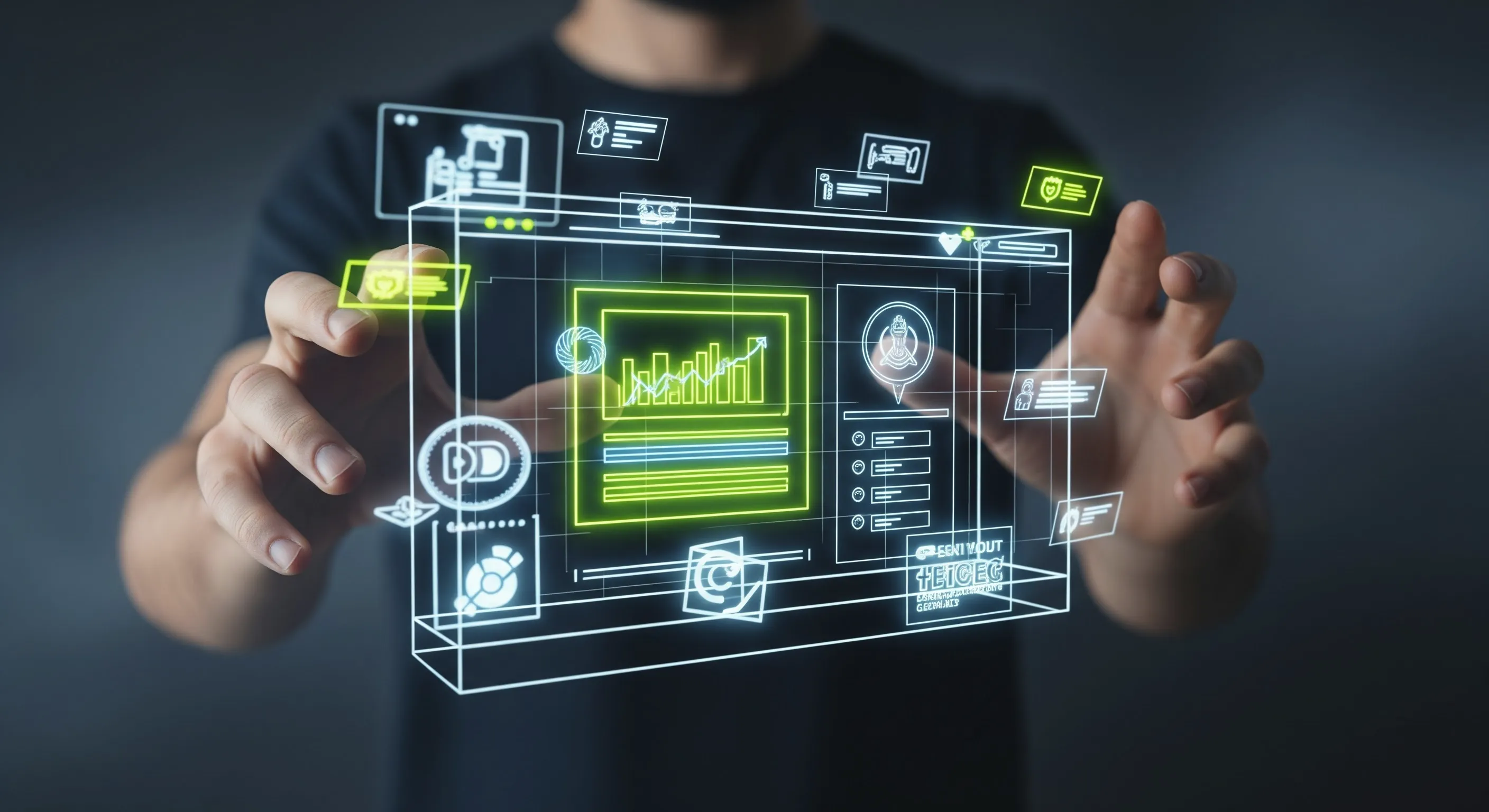
In the digital landscape, your website is more than an online brochure; it's a dynamic experience that shapes your brand's first impression. A great design is no longer just about aesthetics—it's a fusion of usability, performance, and interaction that guides users and drives results.
As we look to 2025, the line between the digital and physical worlds continues to blur. Web design is shifting from flat, static pages to dynamic, interactive environments. Staying ahead means understanding not just the "what" but the "why" behind these shifts. Let's explore the key trends that will define a truly modern user experience this year.
- Dark Luxury Aesthetics: Deep obsidian backgrounds paired with selective neon and glassmorphic accents.
- Bento-Grid Modular Layouts: Organizes complex information into clean, bite-sized responsive cards.
- Kinetic Typography & Micro-Motions: Subtle text animations and hover states that reward user interaction.
1. Immersive 3D & Spatial Design
For years, 3D elements were novelties, often compromising performance for visual flair. Today, thanks to advancements in browser technology like WebGL and accessible tools like Spline or Three.js, 3D has become a practical tool for creating truly immersive web experiences. This isn't just about spinning models; it's about adding a layer of spatial depth that makes a website feel tangible and interactive.
From interactive product configurators that let users explore an item from every angle to subtle animated backgrounds that add a sense of life to a page, 3D design transforms users from passive viewers into active participants. This deeper level of engagement keeps them on your site longer and creates a more memorable brand impression.
Expert Best Practices for 3D:
- Prioritize Performance: A stunning 3D element is useless if it makes your page slow. We always stress optimizing 3D assets and implementing lazy loading to ensure they don't impact Core Web Vitals.
- Ensure Accessibility: Provide fallback options for users on older devices or with slower connections. 3D should enhance the experience, not be a barrier to it.
- Use it with Purpose: Don't add 3D just for the sake of it. Use it to solve a problem—like better product visualization or explaining a complex service.
“The web is a canvas, and design is the brush. How you use it determines the story you tell.”
2. Advanced Dark Mode & Theming
Dark mode has moved beyond a simple trend to become a standard feature and a user expectation. It offers significant benefits, from reducing eye strain in low-light environments to conserving battery life on OLED screens. For 2025, the trend is evolving into more advanced and thoughtful implementations.
A professional dark mode isn't just an inversion of colors. It requires a carefully considered, separate color palette that maintains brand identity and, most importantly, accessibility. Text, buttons, and links must retain high contrast ratios to meet WCAG (Web Content Accessibility Guidelines) standards. In our experience, failing to test contrast in both light and dark modes is a common pitfall that alienates users and can harm SEO.
Technical Considerations for Implementation:
- Use CSS Custom Properties: Defining colors with variables (e.g.,
--text-color: #000;) allows for an easy and efficient switch between light and dark themes. - Respect User Preference: Implement the
prefers-color-schemeCSS media query to automatically apply the user's system-wide preference, providing a seamless experience from the first visit.
3. AI-Driven Personalization & Dynamic Content
Artificial intelligence is no longer a futuristic concept; it's a powerful tool for creating deeply personal user experiences. While e-commerce giants have used AI for product recommendations for years, this technology is now becoming more accessible for all types of businesses.
Imagine a website that adapts to each visitor. A returning user from the finance industry might see case studies relevant to their sector on the homepage, while a new user sees a general introduction to your services. This is the power of AI personalization. By dynamically tailoring content based on user behavior, location, or interaction history, you can reduce friction and make the user's journey more efficient and relevant. While some studies show this can boost conversions by over 15%, the true value lies in making each user feel like the website was designed just for them.
2025-2026 Web Design Paradigm Comparison Matrix
Design Trends Data| Design Trend / Paradigm | Visual & Interactive Features | Required Tech Architecture | User Engagement Impact |
|---|---|---|---|
| Dark Luxury UI & Neon Accents | Obsidian backdrops (#060709), cyber-lime highlights, frosted glass cards | Modern CSS backdrop-filter, CSS Grid, SVG vectors | +28% Dwell Time |
| Interactive AI Terminals & Docks | Embedded generative citation streams, multi-model docks, live telemetry | Lightweight vanilla JS, CSS 3D transforms, JSON schema | 3.2x Higher Conversion |
| Bento-Grid Layout Frameworks | Modular asymmetrical cards, clear visual grouping, fluid mobile stacking | CSS Flexbox/Grid, container queries | -32% Bounce Rate |
Conclusion: Strategy Over Spectacle
The most important trend of all is **strategic implementation**. Whether it's 3D, dark mode, or AI, these are all powerful tools in a designer's toolkit. The mark of an expert is knowing not just how to use them, but *why* and *when* to use them to serve the ultimate goal: creating a better, more effective experience for the end-user that aligns perfectly with your business objectives.