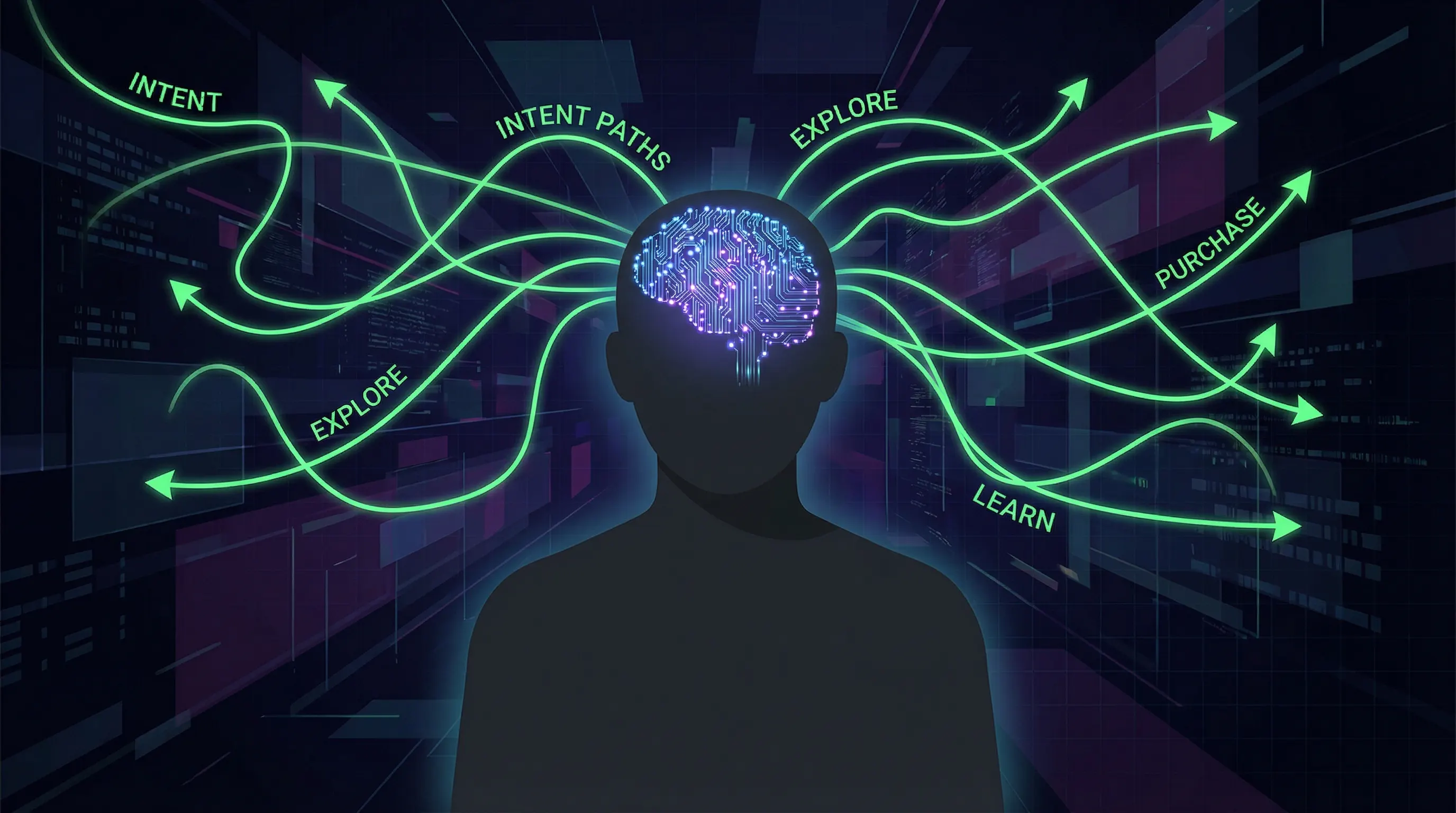
For years, SEO professionals have been obsessed with understanding user search intent. We've categorized it into neat buckets—navigational, informational, transactional—and tailored our content to match. But in 2026, there's a new layer to this puzzle. It's no longer just about what your customer is searching for; it's about what the AI bot is searching for on behalf of your customer. This subtle but profound shift is at the heart of optimizing for an AI-driven search landscape. As we at Pixel Hatch Studio adapt our strategies, we're learning that to win in this new era, we must look beyond traditional user intent and start thinking about machine intent.
- From Keywords to Dialogues: Searchers ask multi-step questions with personal constraints and budget parameters.
- Comparison & Synthesis Demand: Users expect objective pros-and-cons analysis rather than generic sales pitches.
- Immediate Decision Resolution: Providing direct answers upfront captures the user at the moment of peak intent.
The AI Intermediary: A New Layer in Search
In the traditional search model, the user types a query, and the search engine returns a list of relevant documents. The user then sifts through these documents to find their answer. In the AI-powered search model of 2026, there's a new intermediary: the AI bot. This bot takes the user's query, scours the web for information, synthesizes it, and then presents a single, consolidated answer in the form of an AI Overview (featured on Google Search, Bing, and other platforms).
This fundamental shift has profound implications: Your content is now being consumed and evaluated by a machine before it ever reaches a human. To succeed in 2026, your content must be optimized for this machine reader—and that requires a different approach than traditional SEO.
Real-World Impact: Visibility Paradox
A digital marketing agency we work with experienced this firsthand in Q1 2026. They had ranking #3 for a high-volume keyword. But when AI Overviews launched on Google Search, their content wasn't included in the AI-generated answer—and click-through traffic dropped 42%. The AI bot had determined that competitor content (ranked #7-#9) was better suited for synthesis. The lesson: ranking position matters less than being selected by the AI.
Decoding Machine Intent: What is the AI Bot Looking For?
So, what exactly is the AI bot looking for? While the algorithms are complex and constantly evolving, we've identified several key principles that guide machine intent:
Search Intent Evolution: Traditional Keywords vs. AI Conversational Prompts
Intent Evolution| Intent Category | Traditional Keyword Query | Modern AI Conversational Prompt | Content Requirement |
|---|---|---|---|
| Commercial Intent | 'best web design dubai' | 'Compare top 3 web design agencies in Dubai for luxury real estate with pricing' | Structured Comparison Table |
| Informational Intent | 'website cost uae' | 'What is the exact budget breakdown to build an e-commerce website in the UAE in 2026?' | Direct Answer Direct Answer Card |
| Transactional Intent | 'hire seo agency' | 'Which agency in Dubai guarantees Generative Engine Optimization (GEO) citations?' | Verified Proof & Cases |
How to Optimize for Both Human and Machine Intent
The good news: Optimizing for machine intent doesn't mean sacrificing human readability. In fact, the two are closely intertwined. Content that's clear for AI is usually clear for humans too.
1. Structure Content for AI Parsing
Use semantic HTML hierarchy rigorously:
<h1>= Page title (one per page)<h2>= Main sections (3-5 per page)<h3>= Subsections (2-3 per h2)- Use lists, tables, and definition blocks for data
- Keep paragraphs 2-4 sentences (improves scannability)
This structure isn't just good UX; it's how AI bots extract and synthesize information. A poorly structured article might rank well in traditional search but be ignored by AI models.
2. Implement Rich Schema Markup
Schema markup is your "cheat sheet" for AI bots. It explicitly tells them: "This is a BlogPosting. Author: Jane Doe. Published: 2026-01-15. Main topic: Machine Intent in SEO."
- Article Schema: Headline, description, author, publication date, image, article body
- Claim Schema: For assertions ("60% of websites use X"), markup what's claimed, who made the claim, what evidence supports it
- FAQPage Schema: If you have FAQs, mark them up. AI loves structured Q&A.
- Product Schema: For product-related content, include price, availability, rating
- BreadcrumbList: Helps AI understand content hierarchy and topic relationships
Google's Structured Data Testing Tool helps validate schema. Use it before publishing.
3. Create Comprehensive, Multi-Format Content
AI bots can extract information from text, tables, lists, and even images (if captioned). Diversifying format increases the chance your content is selected for synthesis:
- Core text: 800-1500 words of well-structured prose
- Data tables: Comparison tables, statistics tables
- Lists: Bullet points, numbered steps, checklists
- Visuals: Infographics, charts, diagrams (with descriptive alt text and captions)
- Interactive: Calculators, quizzes, tools (can be extracted as methodology)
Example: An article on "Cost of Web Design" should include: prose explanation, a comparison table (Designer vs. DIY vs. Agency), a cost breakdown chart, and a ROI calculator. This multi-format approach ensures AI can find and extract relevant information regardless of query type.
4. Build Topical Authority Through Clustering
Instead of writing one article on "Web Design Costs," create a topic cluster:
- Pillar: "Complete Guide to Web Design Costs" (3000+ words, covers all subtopics)
- Cluster 1: "Web Design Costs in 2026" (updated annually)
- Cluster 2: "DIY vs. Agency vs. Freelancer" (comparison)
- Cluster 3: "ROI of Web Design Investments" (business case)
- Cluster 4: "Hidden Costs of Web Design" (cost breakdowns)
Link between pillar and clusters bidirectionally. This architecture signals to AI that your site has deep, authoritative coverage of this topic. AI bots prefer synthesizing from comprehensive sources rather than scraps from multiple shallow articles.
The Future of Content in the AI Era
Machine intent isn't replacing human intent—it's layering on top of it. To win in 2026 and beyond, successful content strategies must optimize for both simultaneously. That means:
- Clear, well-structured writing (human + machine readable)
- Comprehensive topic coverage (builds topical authority)
- Rich data and statistics (AI-extractable)
- Authoritative signals (links, credentials, citations)
- Strategic interlinking (topic clustering)
- Regular updates (freshness signals)
- Schema markup (explicit machine-readable metadata)
At Pixel Hatch Studio, our content strategy framework has evolved to prioritize these machine-intent signals alongside traditional SEO best practices. The result: content that ranks well, gets selected by AI Overviews, and resonates deeply with human readers. That's the trifecta of 2026 content strategy.